From Sandbox to Funnel: What Six Months in App UA Taught Me

Richard Kos
Richard Kos
Published on Jul 20, 2026in Apps, User Acquisition
My first app at serious scale
During the first half of 2026, I spent quite some time managing UA for my first app at serious scale. Think multiple millions in monthly ad spend.
I had managed these kinds of budgets for games before, but never for an app. So there were a lot of firsts for me, and quite a few things stood out when comparing mobile game UA with app UA at this level.
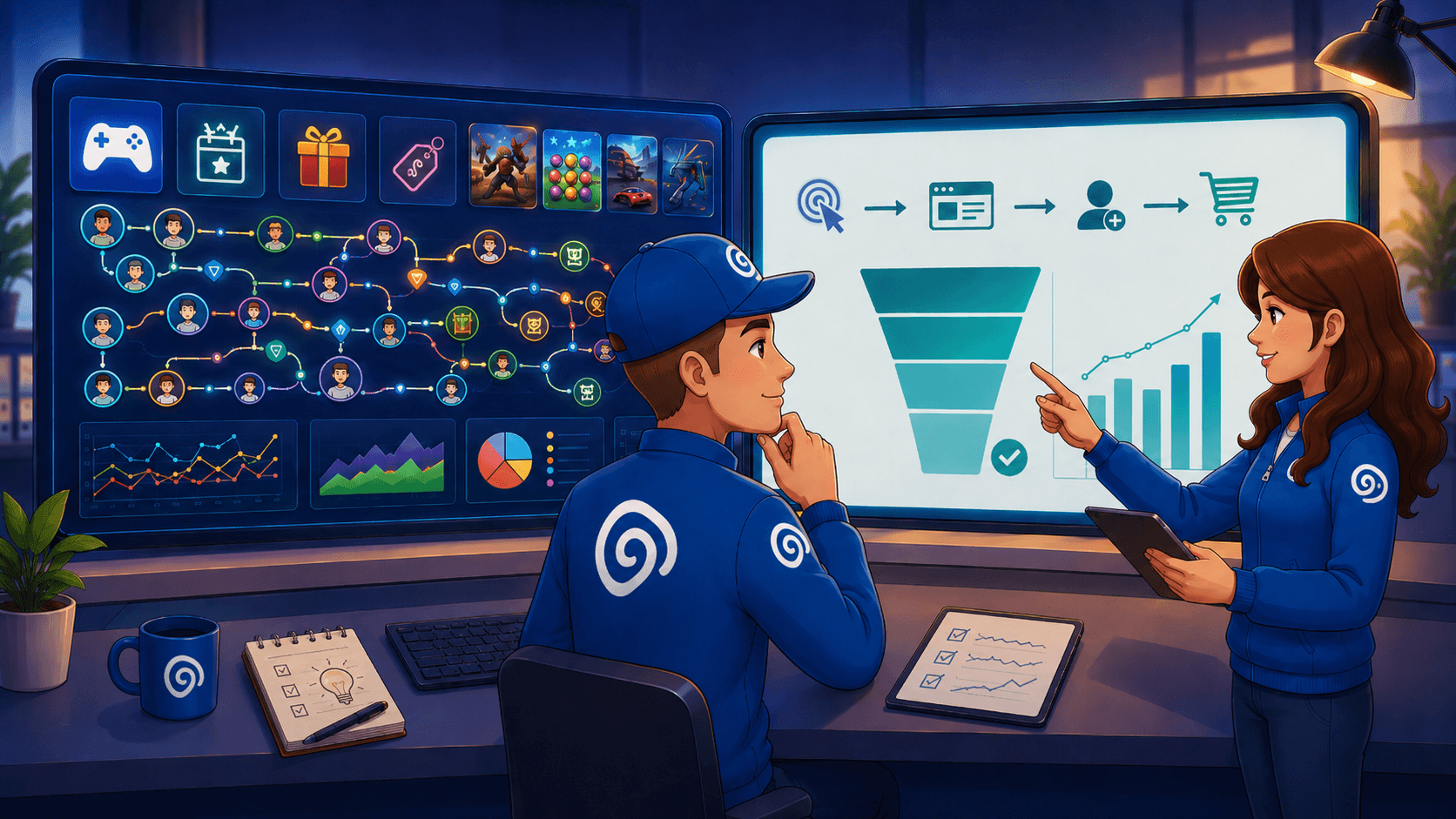
Games feel like a sandbox, apps like a funnel
The biggest difference for me was the clarity of the user journey. Of course, this is not completely black and white. It depends on the game and the app. But in this case, the app journey felt much more linear.
More mobile games are moving towards sandbox-like models. Players can choose between different game modes, follow different progression paths and interact with limited-time events supported by live ops. Then you add IAP sales, changing offers and different types of spenders on top of that.
All of this creates noise for the UA manager trying to understand performance and confidently project future value. With the app, the journey was more straightforward. It did not necessarily make UA easier, but it was often easier to see where the problem was.
How the analysis changed
Another thing that stood out was the cost of acquiring a new customer. It was significantly higher than the cost of acquiring an average social casino player. And the first purchase? Around the same as the full LTV of a social casino player.
That brought us to a new problem: how do we test creatives? If we wanted to test directly on the purchase event, which sits much lower in the funnel, we would need to spend a significant amount per ad before reaching any kind of conclusion. Luckily, the client was prepared to allocate a healthy percentage of the budget to testing.
By selecting an event slightly higher in the funnel, but still meaningful enough to help predict the final CAC, we could test creatives without burning through too much budget while still getting useful data. With games, payer conversion is often higher and purchases tend to happen more frequently. This can make it possible to get a useful creative signal with a lower overall testing budget.
Discovering Web2App
Then there was the opportunity to start testing Web2App campaigns. This was still a fairly new topic for me and something that remains heavily underused in mobile games today. For apps, it has already proven valuable. It allows advertisers to tap into audiences and inventory that may otherwise be difficult to reach. It also gives you more control over the journey before sending someone into the app.
The data coming from these campaigns was strong enough that I have already started implementing a similar approach with one of our gaming clients. The question there is simple: can we acquire valuable players more efficiently through a web journey than through the common app campaign setup?
What both categories can learn from each other
Before working on this app, I expected creative testing to be one of the bigger differences. In reality, it was not. Large app advertisers are producing and testing creatives at serious volume as well. The difference is more in what you are testing and how the creative connects to the rest of the funnel.
Game creatives often sell a motivation, fantasy, progression system or gameplay experience. App creatives tend to be more direct. They focus on a problem, a benefit and a clear reason to take the next step.
Games can learn from how apps connect the ad, landing page and conversion flow. Especially as Web2App becomes more relevant.
Apps can learn from how games approach different motivations and find completely different ways to sell the same core experience.
The takeaway
I would not say app UA was easier. It was just easier to see where the problem was.
Games taught me to look at motivations, creative angles and player behaviour inside much noisier systems. Working on an app at this scale made me think more carefully about funnel events, intent and how each step helps predict the final acquisition cost.
The best approach probably sits somewhere in between: the motivational thinking of games combined with the funnel discipline of apps
Frequently asked questions
Is user acquisition for apps easier than for mobile games?
Not necessarily. In my experience, app UA was more straightforward to analyse because the user journey was more linear. That did not make the decisions easier, especially when acquisition costs were high. It was simply easier to identify where users were dropping out of the funnel.
What is the main difference between mobile game UA and app UA?
Mobile games often behave more like a sandbox. Players can move through different game modes, events, progression systems and offers. App funnels are often more linear, moving from an ad click towards registration, a key action and eventually a purchase or subscription.
The exact journey depends on the product, but app performance can be easier to connect to specific funnel steps.
Why can creative testing be more expensive for apps?
Some apps have a high customer acquisition cost and a relatively low volume of final purchase events. Testing every creative directly against that purchase event can therefore require a significant amount of spend before you have enough data to reach a conclusion.
This makes the selection of the right testing event especially important.
How do you choose an event for creative testing?
The event should happen frequently enough to generate useful data, but still be closely connected to the final acquisition cost.
An event that sits too high in the funnel may produce cheap results without predicting customer quality. An event that sits too low may require too much budget per creative. The goal is to find a meaningful point between the two.
What is Web2App user acquisition?
Web2App campaigns send users from an ad to a web experience before directing them into the app. This could be a landing page, registration flow, questionnaire or another step that helps qualify the user.
It gives the advertiser more control over the journey and can open up audiences or inventory that are harder to reach through standard app campaigns.
Can Web2App also work for mobile games?
Potentially, yes. It is still less common in mobile gaming, but that is starting to change.
Web2App could be used for pre-registration, quizzes, personalised landing pages, web shops or other experiences that build intent before the install. Whether it improves performance depends on the game, platform and additional friction introduced by the web journey.
What can mobile game UA and app UA learn from each other?
Games can learn from the structured funnel thinking often used by app advertisers, especially around landing pages, conversion events and Web2App.
Apps can learn from how games test different motivations and find multiple creative ways to sell the same core product.
The strongest approach probably combines the motivational thinking of games with the funnel discipline of apps.